
Repairing a tank heater
A tank heater that leaks at a fitting, runs out of hot water or has a failed part can be checked and repaired. If the tank itself has failed, replacement is the option.
Heater trouble can mean a tank that needs repair or replacing, or a tankless unit that needs installing or servicing. Describe the symptoms and we help decide which.
If you are replacing a heater, the sections below set out how New Jersey treats a like-for-like swap.
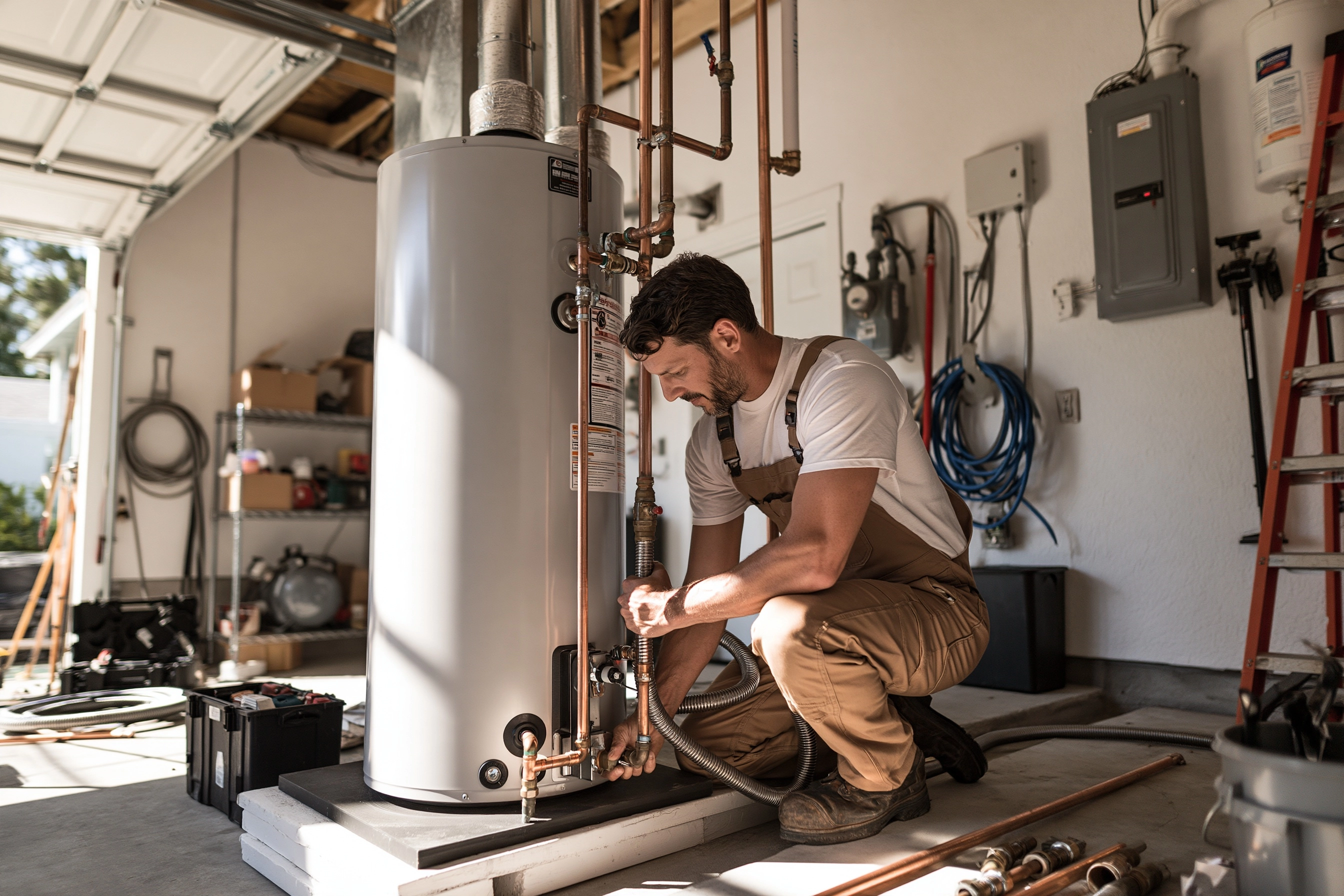
A tank heater that leaks at a fitting, runs out of hot water or has a failed part can be checked and repaired. If the tank itself has failed, replacement is the option.
The replacement tank is sized to the household’s hot water use and set in the old heater’s spot. Settling on the capacity before the visit lets the plumber come with the right unit.
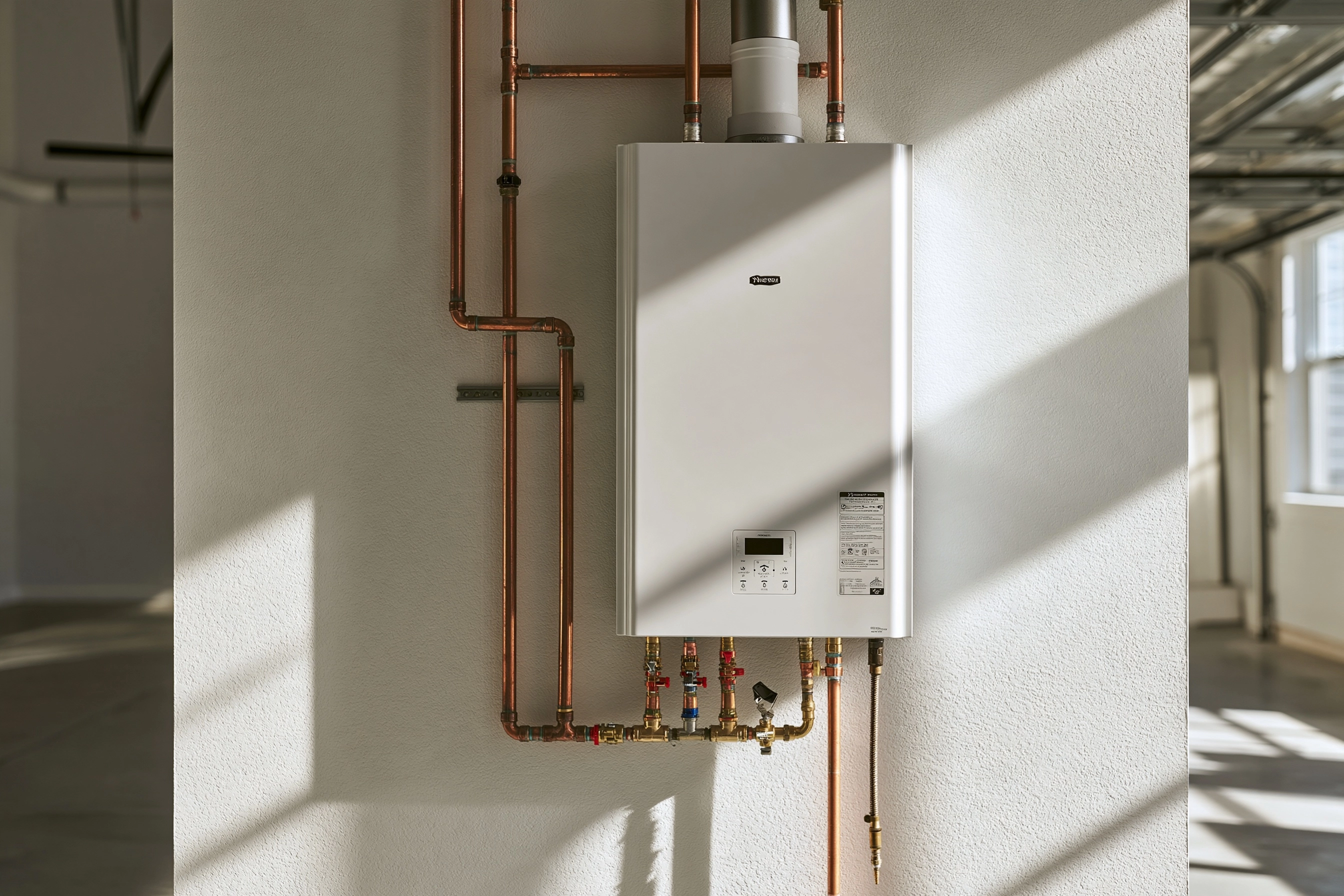
Moving to tankless means a wall-mounted unit with no storage tank. Before installation the gas or electric supply and the venting are checked for the model you choose.
A tankless unit that runs cold, shuts off mid-shower or shows an error code can be inspected and serviced, so you find out whether it needs a repair or a replacement.
New Jersey’s Uniform Construction Code treats a new water heater of like capacity, put in place of an existing one, as minor work. The work needs a permit and an inspection, but it may begin once the local construction office has been notified.
The state also decides who may do the job, and the list is short, made up of master plumbers, authorized plumbing contractors and employees paid on a W-2.
Household size and the hot-water uses that overlap are the two entries the water heater size calculator asks for. Demand peaks in one busy hour, and the tank has to cover that peak.
For tankless, Clifton’s January low of 26°F lands in the 52°F inlet band of the tankless flow calculator, so a unit set to 120°F has to add 68°F to the incoming water.
The serial number decoder takes the brand, whether the unit is tank or tankless, and the serial number from the data plate, and returns a manufacture date. When a brand repeats its code, the tool asks which decade the heater went in.
Water around the base of a heater can mean a leak, so the leak detection page applies, and old supply piping is handled under repiping. The home page has the rest of the list.
Call us to discuss your current issue and how we can assist you. The call is free and you get a free, personalized estimate with no obligation. We're here to help.
Call (855) 321-3426